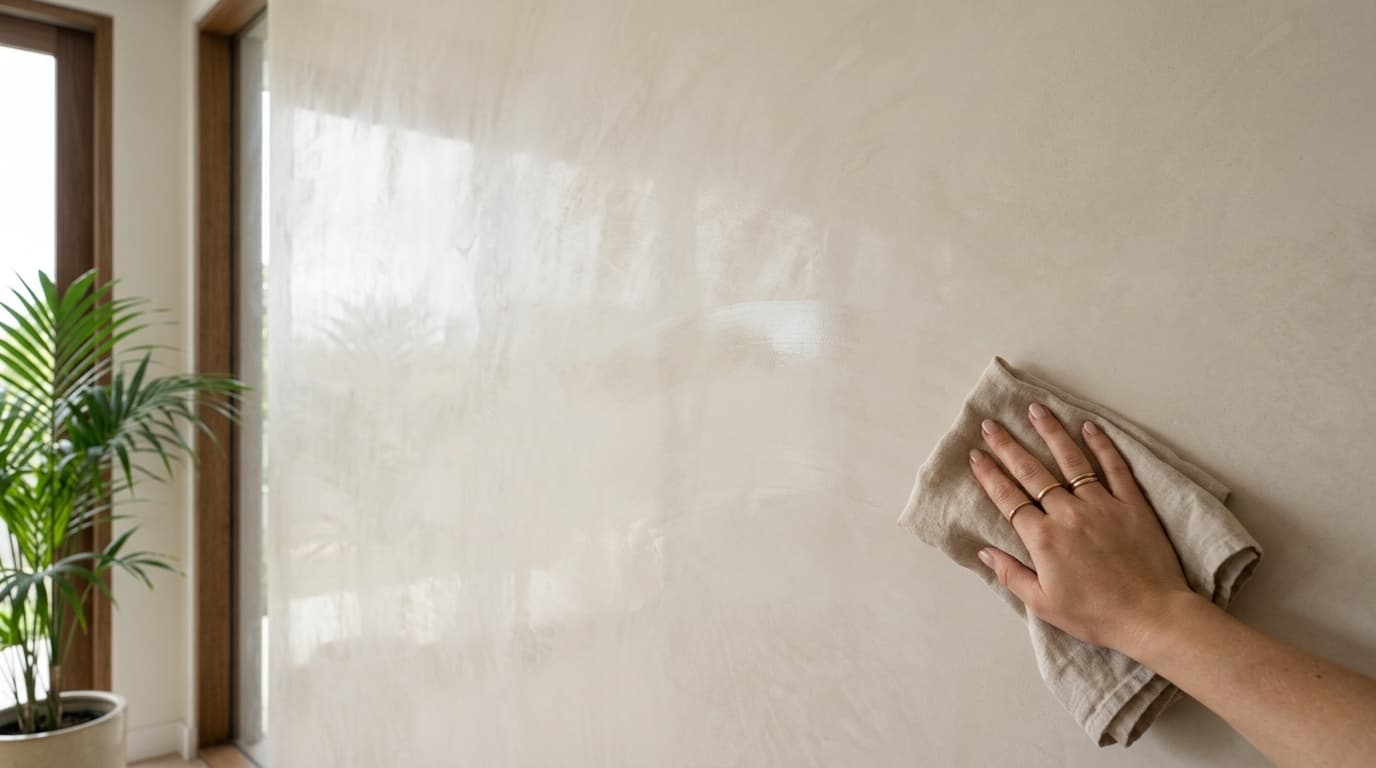
Polished plaster and Venetian plaster are often described as low-maintenance finishes — and they genuinely are. But "low maintenance" doesn't mean "no maintenance." Knowing how to care for your plaster walls properly will ensure they stay beautiful for decades, retaining their sheen, colour depth, and that unmistakable tactile quality that makes them worth having.
Everyday Cleaning
For routine dust and general cleaning, a soft, dry microfibre cloth is all you need. Polished plaster and Venetian plaster surfaces don't accumulate dust any more than painted walls — in fact, the burnished surface is often slightly more resistant to dust adhesion than matte paint.
For marks, fingerprints, or light soiling, use a barely damp cloth — not wet, barely damp — and wipe gently with the grain of the plaster. Never scrub, and never use a rough cloth or sponge pad. The polished surface can be scratched by abrasives, and while minor scratches can be repaired, they're better prevented.
What Not to Use
This is the most important part of polished plaster care:
- No acidic cleaners: Vinegar, lemon juice, and most bathroom cleaners are acidic and will etch the lime surface. This is the most common cause of plaster damage we see.
- No alkaline cleaners above pH 9: Very strong alkaline cleaners can also damage the surface.
- No abrasive pads, steel wool, or scouring sponges: Even gentle scouring will dull the polished finish.
- No bleach: While lime is naturally anti-fungal, bleach can discolour pigmented plaster.
- No steam cleaners: The combination of heat and moisture can reactivate the surface and cause damage.
The cleaner of choice for polished plaster is a pH-neutral, soap-based cleaner diluted in water. Any professional cleaning product marketed for natural stone or lime plaster will be appropriate. For most everyday cleaning, plain water on a damp cloth is genuinely the safest option.
Annual Waxing for High-Sheen Finishes
For high-burnish Venetian plaster and polished plaster finishes, an annual application of natural beeswax or carnauba wax is recommended. This serves two purposes: it renews the surface sheen, and it provides a thin protective layer that makes everyday cleaning easier.
The process is simple:
- Ensure the wall is clean and completely dry
- Apply a very thin layer of wax using a soft cloth, working in circular motions
- Allow to dry for 15–20 minutes
- Buff to a sheen with a clean, dry cloth
Use wax sparingly — over-waxing creates build-up that can attract dust. For matt Venetian finishes (Calce-type), waxing is optional and can be done every 2–3 years rather than annually.
Dealing with Marks and Minor Damage
One of the genuine advantages of Venetian plaster over paint is repairability. A trained plasterer can patch and blend a damaged area invisibly, unlike paint where patch repairs almost always show. If you have a significant mark or chip that doesn't respond to gentle cleaning:
- Don't attempt to scrape or sand it yourself
- Contact us — we can arrange a touch-up visit
- Keep a note of the colour code from your original installation for exact colour matching
Plaster in Bathrooms
If you have our waterproof plaster system in your bathroom or shower, maintenance is slightly different. The sealed, waterproof surface is more forgiving of water and moisture. Use a soft squeegee to remove water from shower walls after use, which prevents mineral deposits from building up. Clean with a pH-neutral cleaner and a soft cloth.
Summary: The Simple Rules
- Dry dusting for routine care
- Damp cloth (not wet) for marks
- pH-neutral cleaner only
- No acids, no abrasives, no bleach
- Annual wax for high-sheen finishes
- Call us for any significant damage
Follow these simple guidelines and your plaster walls will reward you for decades. For questions about caring for your specific finish, or to arrange a maintenance visit, contact our team.
Target Keyword
how to clean polished plasterVenetian Plaster Sydney
Last updated: 10 March 2026